

Jira testing works best when QA teams can manage test cases, executions, bug reporting, and visibility without leaving their everyday workflow. For many teams, Jira for testing is already a natural choice because development work, defects, and collaboration are already happening there. The challenge is how to use Jira for testing in a way that keeps information organized, execution efficient, and reporting clear.
In practice, testing in Jira becomes effective when teams can:
- Keep test information close to development work
- Report bugs with enough context
- Use JQL to manage tests faster
- Track execution history and traceability
- Review reports without relying on spreadsheets or disconnected tools.
This article walks through how QA teams can use Jira testing more effectively, and where a Jira-native app like QAlity Plus can make that process easier.
Why teams use Jira for testing
Many QA teams already use Jira every day, which is why Jira for testing makes sense in the first place. Instead of separating testing from delivery, teams can keep test-related work closer to developers, tickets, and release workflows.
That improves information flow, reduces duplicated updates, and makes testing with Jira easier to manage over time.
QAlity Plus – Test Management for Jira is a Jira app designed around testers’ everyday needs. The practical value is not just that it adds features, but that it helps QA teams save time, improve visibility, and keep the flow of information closer to the work already happening in Jira.
QAlity Plus is an intuitive testing and reporting companion that lets teams create and link test cases in Jira, organize testing with cycles, simplify bug reporting, and review traceability and execution data.
Learn how QAlity Plus supports the growth and qualities of a pro tester below.
Pro tester is well-informed: Keep test information in one place
Nobody wants to bother others with their tasks. However, during the tester’s work, questions will often arise that will determine further action.
And one of the biggest problems in Jira testing is fragmented information. QA teams lose time when they have to search across comments, spreadsheets, and separate tools just to understand whether a bug was already reported, when a test last failed, or what happened in the previous execution.
Searching for each piece of information yourself would be a waste of your time. On the other hand, asking other testers would be a waste of their time. A pro tester does not like wastefulness – they keep all the necessary information at hand, in the system they use.
Can Jira be used for testing without adding complexity?
Yes, but only if the team can access execution history, bug context, and test progress in one place instead of stitching it together manually.
In QAlity Plus, all key data related to test cases can be viewed during the test case execution.
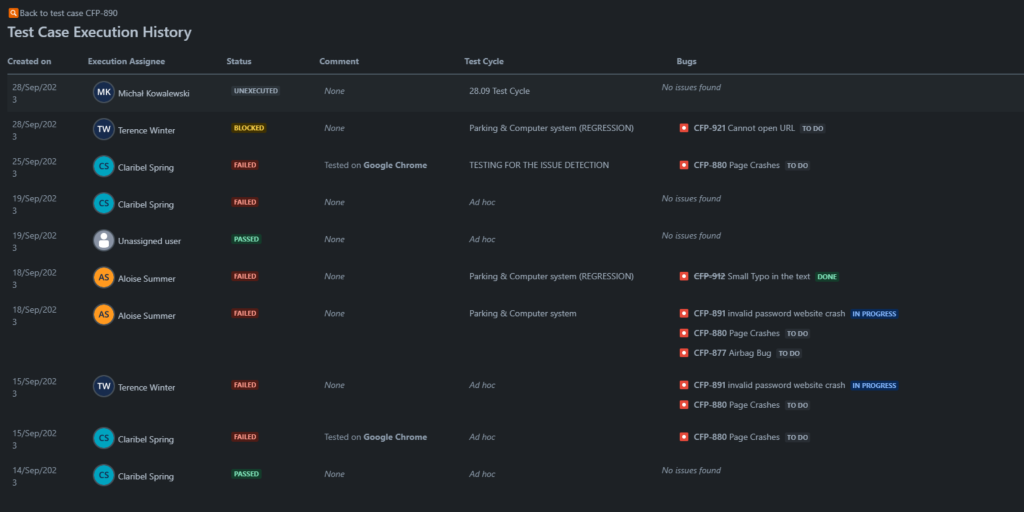
On the Execution History page, you will find:
- The number of executions performed so far,
- The previous execution status,
- The date of the last failed test,
- The bugs connected to failed test steps in previous executions.
Quick and easy access to the above information streamlines work and minimizes the need to ask team members for details about test cases.
As a result, a pro tester with the support from QAlity Plus is always well-informed and can perform their tasks efficiently, without involving others when not necessary.
Pro tester makes testing in Jira easier to share across the team
The common goal of testers, developers, and all other team members is to make work easier, not more complicated. To achieve this, it is necessary to ensure an efficient flow of information and quick access to the latest work results.
Communication must go both ways to serve its purpose. A pro tester not only uses the data collected in the system, but also provides it.
Testing in Jira works better when results are visible to more than just the tester. Developers, QA engineers, and project stakeholders all benefit when test outcomes, linked scenarios, and updates stay inside the same workflow.
This is where a native Jira testing tool comes into play. In QAlity Plus, testers do not need to write down test results in separate files and programs. Tests and their key information are located just below the tasks in Jira and don’t require additional exchange of messages or comments between team members.
Having one coherent database minimizes the risk of errors and misinformation.
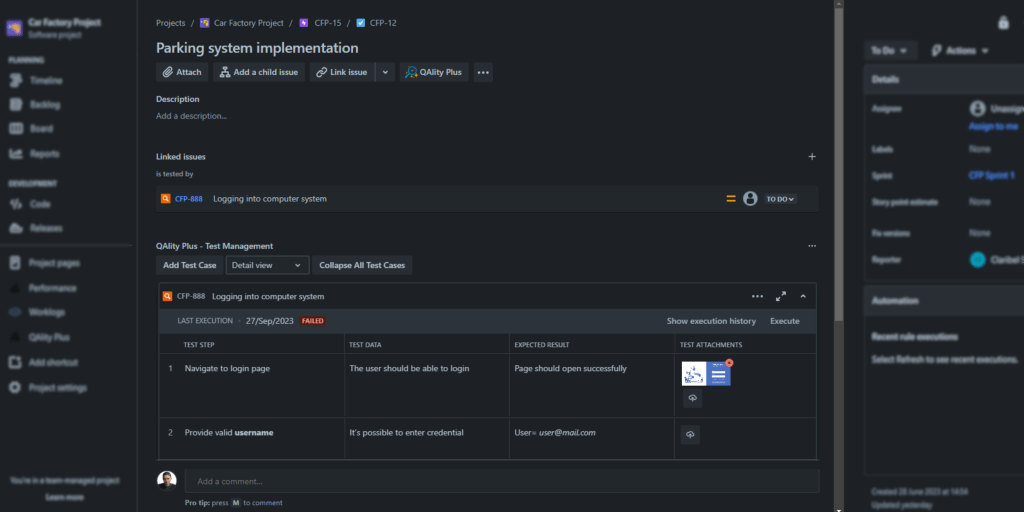
Below the task you can also view test scenarios, allowing you to gain a better understanding of the situation at any given moment.
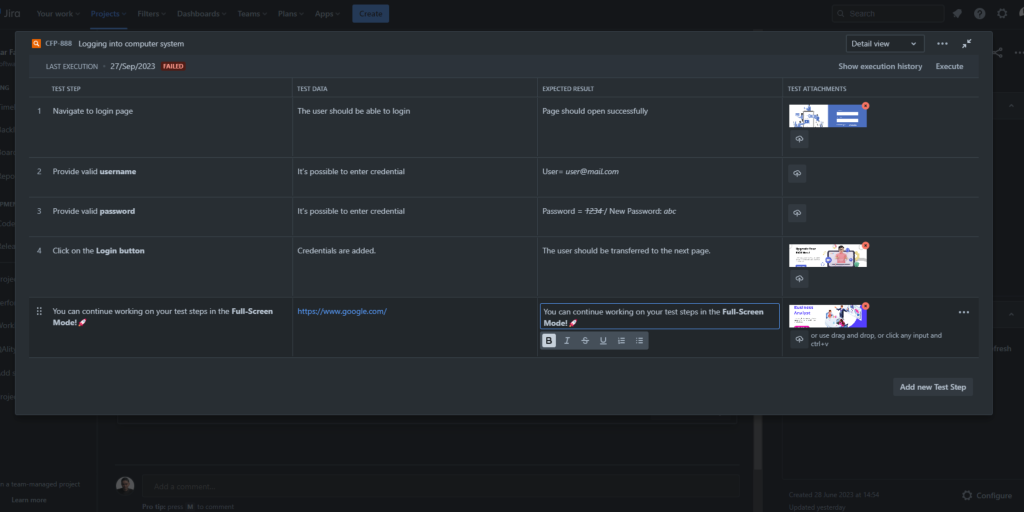
A pro tester provides colleagues with all the necessary data. They collect it in one place so that everyone can access it easily. They also make sure to keep the system up to date, improving the work of the entire team.
How do QA teams use Jira for testing more effectively?
By reducing silos. The more visible test results are inside Jira, the less time teams spend chasing updates across separate files and messages.
Pro tester makes bug reporting faster and clearer
Bug reporting is one of the most important parts of testing, but also one of the easiest places to lose time. If every bug must be properly described and contain a set of necessary information, testers spend too much time repeating context instead of validating product quality.
In QAlity Plus, bug data fills in automatically. Each newly reported bug has a generated description containing the name of the executed test case, execution date, link to execution, and steps necessary to repeat the bug. This set of information makes it easier to trace the fate of the test and identify the reasons why it failed.
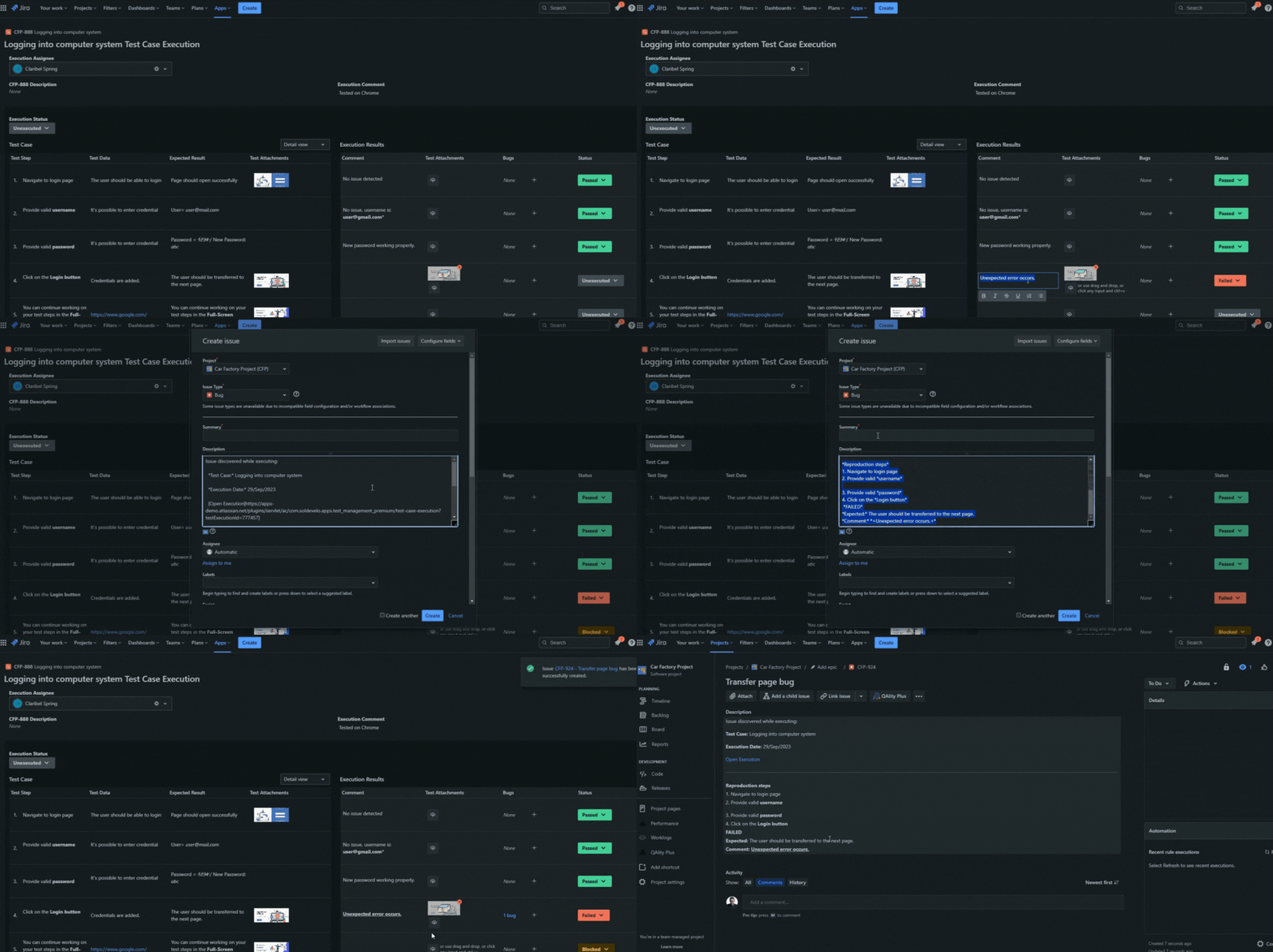
A pro tester immediately reports bugs containing all the necessary data and doesn’t have to enter it manually.
Pro tester uses JQL to manage tests faster
Tester’s work is divided into many smaller activities that together take up a lot of time and energy. Many of these tasks can be performed faster with the right tool.
QAlity Plus was designed for testers who want to save their valuable time. It offers several functions designed to do simple but necessary tasks for the user, or to minimize the time required to perform them.
And a practical Jira testing workflow should not depend on repetitive tasks. When teams manage larger sets of tests, bulk actions matter. This is where JQL becomes especially useful.
Adding test cases to test cycles using JQL
Manually adding test cases to a test cycle is fine as long as you are dealing with a few cases. But what if there are a dozen or several dozen of them? Spending hours clicking on each of them individually is not an efficient solution.
QAlity Plus allows you to add test cases to your test cycle in bulk. This is done using a JQL filter, which allows you to search for test cases that meet specific criteria.
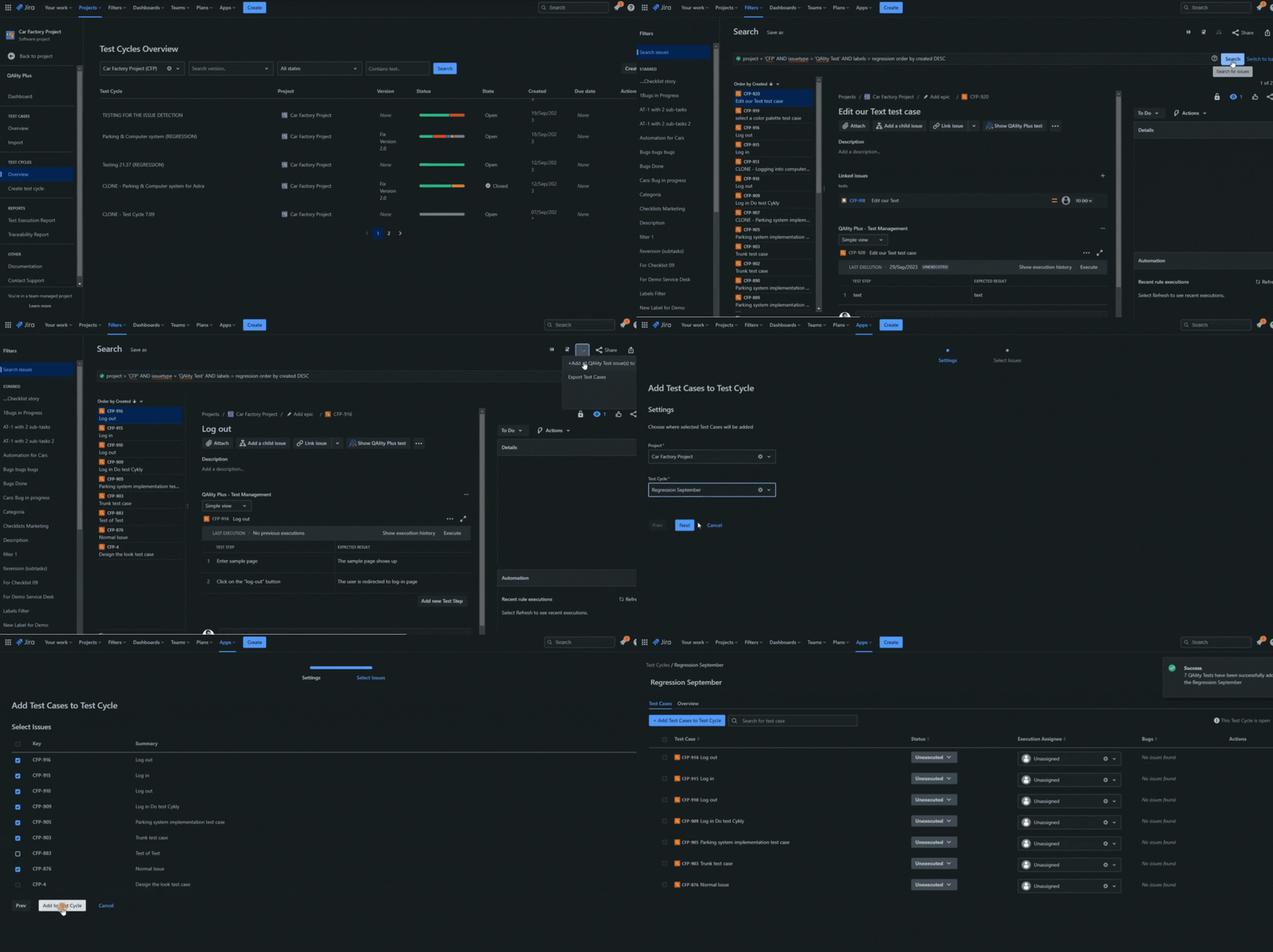
From the filtered test cases, you can select all or some of them and add them to the test cycle in bulk, significantly speeding up the entire process.
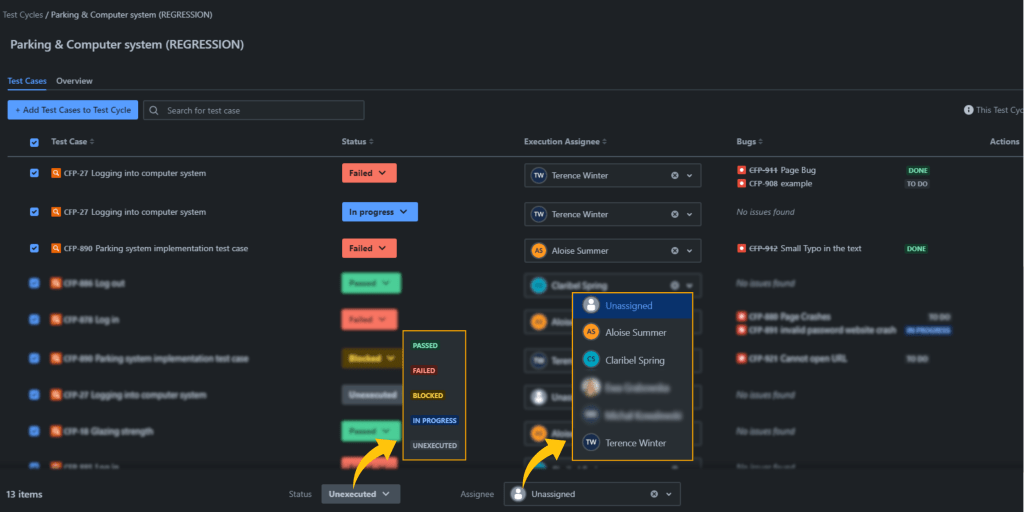
Assigning test cases to multiple users
A similar situation occurs when assigning test cases to users. You can save a lot of time by doing it in bulk. QAlity Plus provides such a feature.
Pro tester turns Jira testing results into useful reporting
Tests would be pointless if we didn’t take any steps related to their results. Drawing conclusions based on the outcomes and, consequently, implementing changes to the working practices, are necessary actions on the development path.
However, without appropriate tools enabling quick data analysis, this would be very time-consuming.
In QAlity Plus, drawing conclusions is easy. Using two reports – Test Execution Report and Traceability Report, you can monitor the health of the tested system, check the system’s test coverage, and analyze the connections between individual tests and how often they find errors.
Test Execution Report
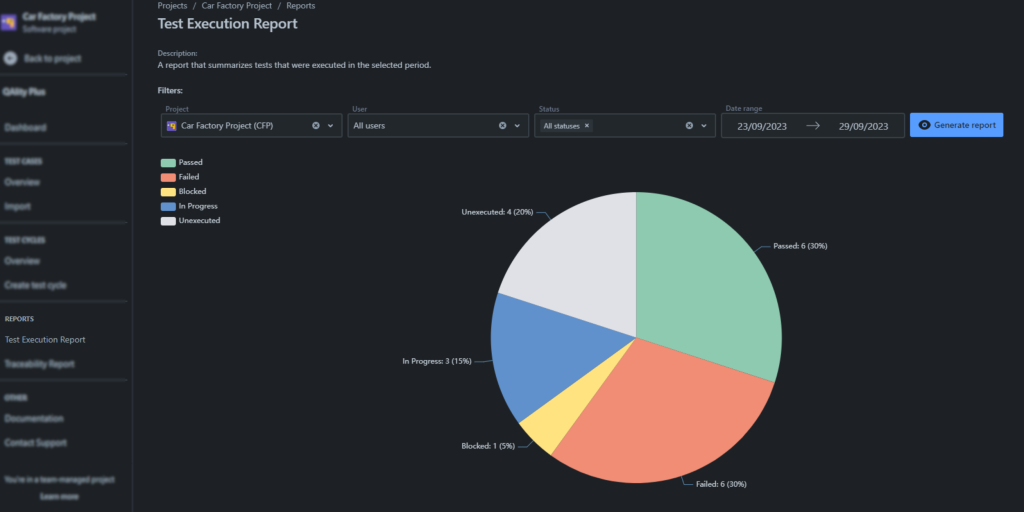
It displays all tests performed in the selected date range, along with the test cycle they belong to, the date of execution, the person assigned, and the result. Executions can be filtered by project, user, and status.
Traceability Report
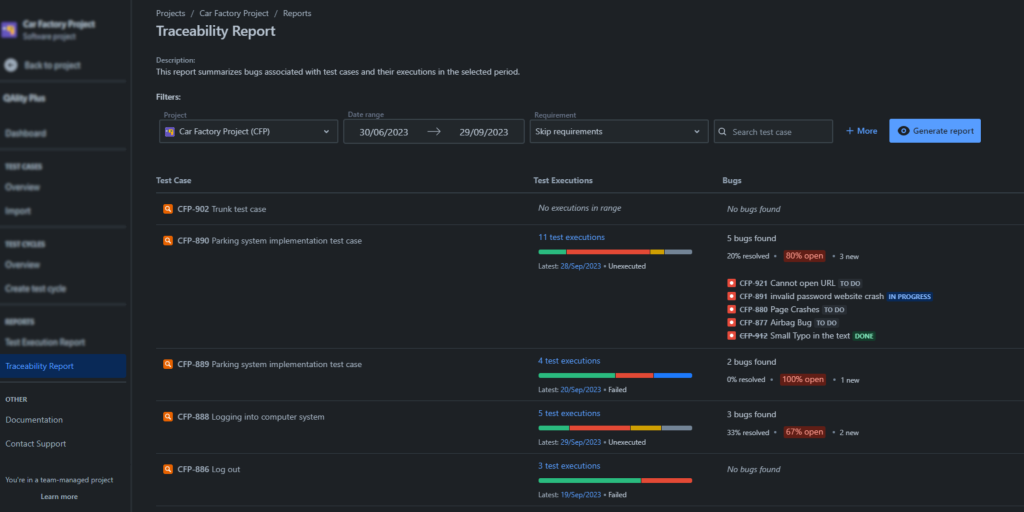
It allows teams to assess project test coverage and trace the connections between tests, executions, and detected bugs over a selected period. That kind of data makes it easier to identify gaps, recurring problems, and areas that need more attention.
In addition to information about the system itself, reports in QAlity Plus also provide data on the team’s work efficiency. For example, in the Test Execution Report, we can track the results of test executions by individual employees and check who performs them most effectively (finds the most bugs and most often fails the tests).
Such information is useful from the perspective of testers’ efficiency, as they can learn from each other’s best practices.
Will Jira be enough for test management on its own?
For simpler workflows, it can be. But once teams need better execution visibility, traceability, reporting, and structured test-case management, many QA teams add a Jira-native test management layer instead of relying on disconnected reporting or spreadsheets.
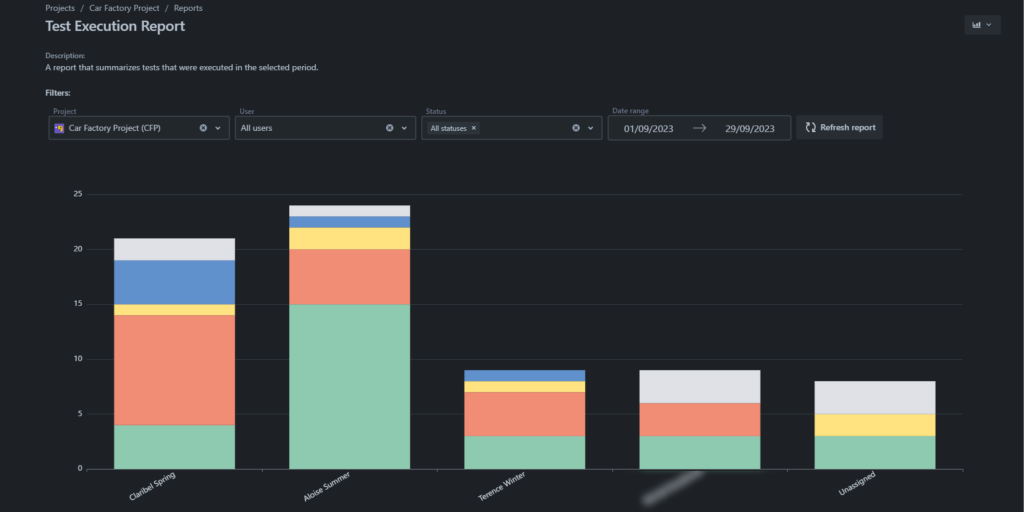
A pro tester does not test for the sake of testing, but to have a real impact on the quality of the product and the team’s performance. Thanks to the data contained in the reports, issues can be quickly and effectively detected and eliminated.
Pro tester makes the move from spreadsheets easier
For teams that have previously only used spreadsheets, transferring data to a new tool may seem complicated and time-consuming. To make the process easier, QAlity Plus offers import functionality.
Test cases can be imported in CSV format into the selected project, and fields can be mapped before import so the data appears correctly in the system.
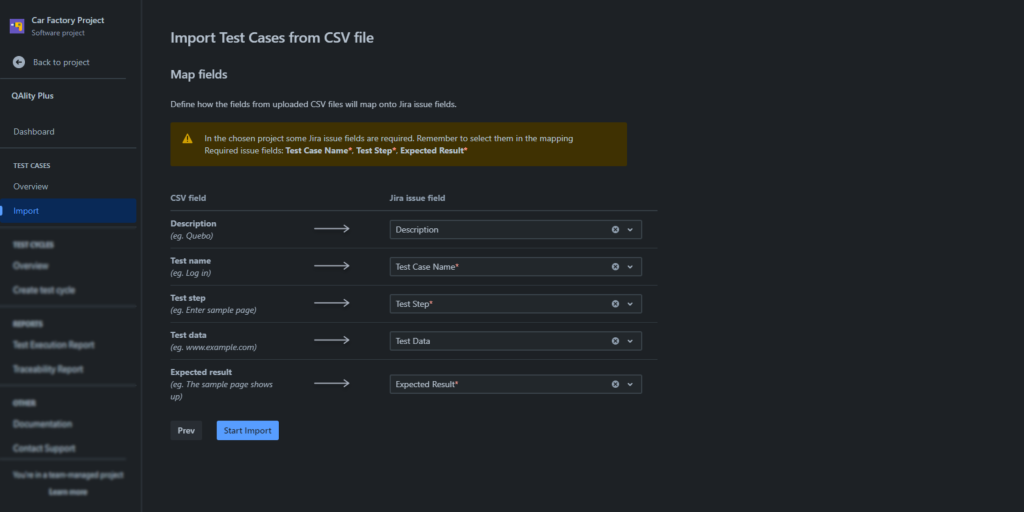
Once mapping is complete, the data is ready for the import. In these few simple steps, you can transfer your work from spreadsheets to QAlity Plus.
The system also supports data migration from other Jira applications (Zephyr Squad, Zephyr Scale, Xray), and our team offers assistance in carrying out such an operation.
That makes how to use Jira for QA testing a more realistic conversation for teams that are still transitioning from manual or fragmented setups.
What makes a good Jira testing workflow?
A good testing in Jira is where you get to keep quality work close to delivery instead of treating QA as a disconnected final-stage activity. That means test cases are easy to organize/update, execution history is visible, bugs are reported with enough context, JQL helps teams manage work in bulk, and traceability and reporting are available without exporting everything elsewhere.
Pro tester chooses a Jira testing setup that matches their team’s needs
A good tool is like a tester’s right hand – it enables efficient and effective work. However, contrary to popular belief, quality does not have to always go hand in hand with a dizzying price. In the shadow of popular, expensive solutions, you can find lesser-known applications that will meet the basic expectations of every tester, without straining the company’s budget.
QAlity Plus supports small teams by making its features available for free to groups of up to 10 users. A cloud instance for up to 50 users costs $75 per month, while the price for 100 users is $150 per month. For comparison, the more popular Jira testing tool, Zephyr Squad, costs 3 times more.
More expensive applications are often equipped with more advanced functions. However, it is important to carefully analyze the needs of your team and compare them with the offers of various sellers. A more expensive solution is not always the suitable one.
In QAlity Plus, you only pay for what you actually need. The application is equipped with all the basic functions necessary for efficient and comfortable testing. Unlike more expensive solutions in which you pay extra for additional advanced options, QAlity Plus offers simplicity and intuitiveness at a favorable price.
Full comparison of 3 testing apps – QAlity Plus, Xray, and Zephyr Squad is available on our blog.
A pro tester is economical and carefully chooses the tool that will serve them best.
Pro tester doesn’t overlook support and reliability
Purchasing a license to access the application is one thing, but what comes next? What should you do if you encounter errors that make your work difficult? Or if it turns out that the application is missing a function that you need?
QAlity Plus offers technical support with a 24h response time on business days. The team is also open to ideas and suggestions for new functionalities or changes that can improve the app’s performance and provide customers with what they need. In addition, QAlity Plus has the Cloud Fortified badge, which is a security guarantee obtained based on the Atlassian requirements.
A pro tester can be sure that the security of their data is a priority and that in case of any problems, they will receive appropriate support as quickly as possible.
Become a pro tester!
With the help of the right tool, a tester’s work can become faster, simpler, and more effective. Good practices such as maintaining a consistent database that is accessible to the entire team, or doing certain repetitive tasks in bulk to save time, are valuable regardless of what testing application you use.
However, it is worth investing in a solution that allows you to achieve your goals in an easy, convenient, and profitable way.
The features listed above are just a simplified representation of how QAlity Plus can impact a tester’s performance. Visit the QAlity Plus – Test management for Jira page on Atlassian Marketplace and become a pro tester.
Conclusion
Jira testing works best when teams use it to improve visibility, speed up execution, and keep quality work close to delivery. The goal is not just to run tests in Jira, but to make testing in Jira easier to manage, easier to report on, and easier to connect with the rest of the team’s workflow.
For growing QA teams, that usually means moving beyond scattered files and manual updates toward a setup that supports execution history, bug reporting, JQL-based bulk actions, and traceable reporting.
That is where a Jira-native solution like QAlity Plus makes sense: not as a disconnected add-on, but as a practical way to make Jira for testing work better in day-to-day delivery. If your team is comparing options, our guide discusses on how to choose the right Jira test management tool and breaks down what to look for in terms of visibility, speed, and adoption.